
Choosing the right cooking system is important when setting up a modern hot pot restaurant. Commercial induction cookers and ceramic cookers are both popular options for built-in restaurant tables, but they work differently and offer different advantages.
This guide compares induction and ceramic cookers for hot pot restaurants and explains which factors restaurant owners and project buyers should consider before choosing.
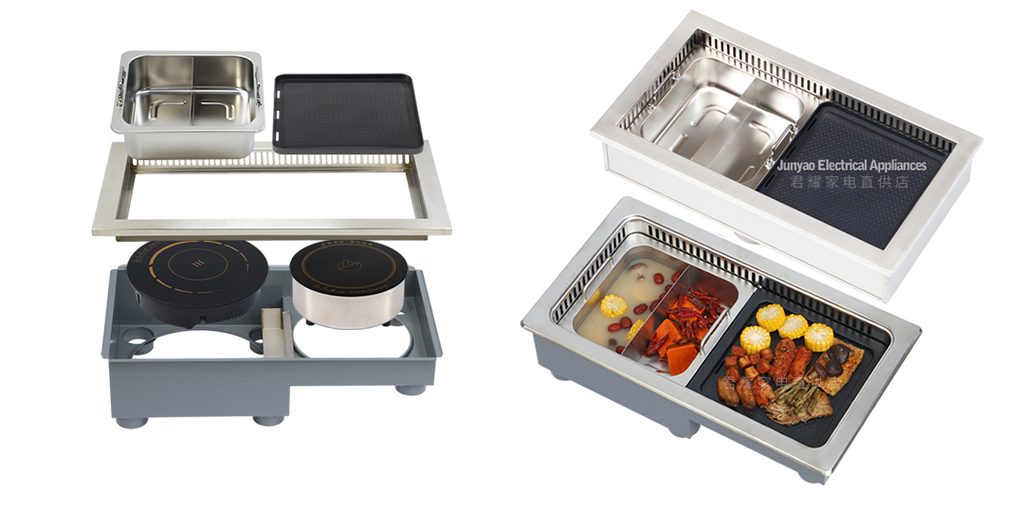
What Is a Commercial Induction Cooker?
A commercial induction cooker uses electromagnetic energy to heat compatible cookware directly.
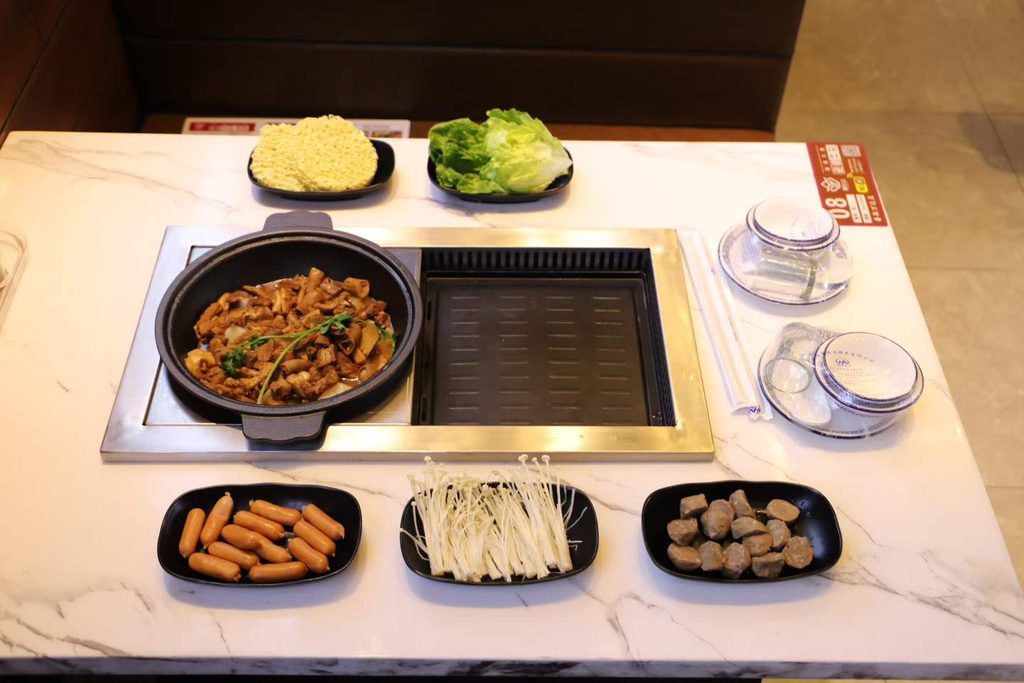
For hot pot restaurants, an induction cooker can be installed directly into the dining table, allowing customers to cook hot pot at the table.
Common advantages include:
- Fast heating
- Precise temperature control
- Efficient heat transfer
- Compact built-in design
- Easy temperature adjustment
For restaurants with multiple tables, the electrical specifications and total power load should be considered during the design stage.
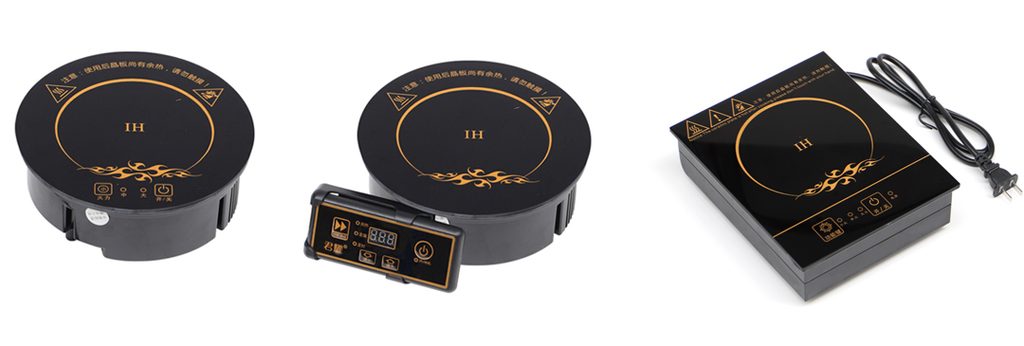
What Is a Commercial Ceramic Cooker?
A ceramic cooker uses an electric heating element to generate heat through a ceramic glass cooking surface.
It can also be integrated into commercial hot pot tables and is suitable for front-of-house dining applications.
Common advantages include:
- Smooth ceramic glass surface
- Easy cleaning
- Suitable for different cookware
- Adjustable heating levels
- Modern appearance
- Built-in table installation
Unlike induction cooking, ceramic cookers do not rely on magnetic cookware.
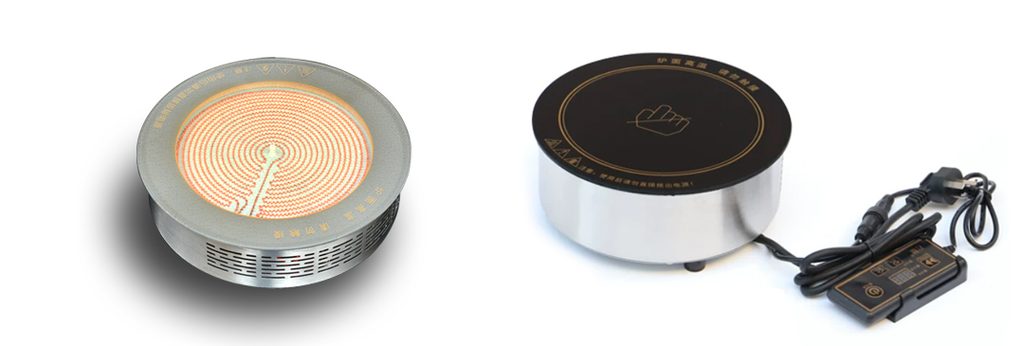
Induction vs. Ceramic Cooker: Key Differences
The two cooking systems have different heating technologies and characteristics.
| Feature | Induction Cooker | Ceramic Cooker |
|---|---|---|
| Heating method | Electromagnetic heating | Electric radiant heating |
| Heating speed | Generally fast | Generally slower |
| Cookware | Compatible cookware required | More cookware flexibility |
| Cooking surface | Usually remains relatively cooler | Cooking surface becomes hot |
| Temperature control | Precise and responsive | Adjustable |
| Cleaning | Smooth surface, easy to clean | Smooth glass surface, easy to clean |
| Built-in table | Yes | Yes |
| Hot pot application | Excellent | Excellent |
Actual performance depends on the specific equipment model, cookware, power rating, and operating conditions.
Which Is Better for a Hot Pot Restaurant?
There is no single answer for every restaurant.
The best choice depends on the restaurant concept, cookware, electrical system, table design, budget, and customer experience requirements.
Choose an Induction Cooker If You Want Fast Heating
Induction cookers are a good option for restaurants that prioritize fast heating and responsive temperature control.
They are especially suitable for hot pot restaurants where customers frequently adjust cooking temperatures during a meal.
Choose a Ceramic Cooker If You Need More Cookware Flexibility
Ceramic cookers can work with a wider range of cookware because they do not require magnetic induction-compatible pots.
They can also provide a modern glass cooking surface that integrates well with restaurant tables.
Choose Based on Your Restaurant Table Design
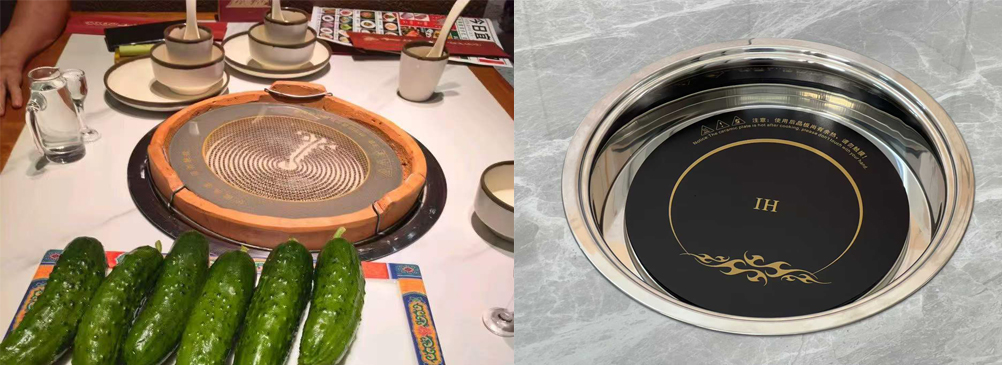
Both induction and ceramic cookers can be designed for built-in table applications.
The final choice should consider:
- Table thickness
- Installation opening
- Cooker dimensions
- Power requirements
- Control position
- Heat dissipation
- Tabletop material
What Should Restaurants Consider Before Choosing?
Heating Power
Choose the appropriate power according to the cooking requirements and number of tables.
Multiple cookers operating at the same time can create a significant electrical load, so the restaurant’s electrical system should be planned in advance.
Electrical Specifications
For international projects, confirm the required voltage, frequency, plug type, and power specifications before ordering.
Table Integration
The cooker should match the table structure and installation opening.
This is especially important for custom rock slab, marble, solid wood, or stainless steel restaurant tables.
Cleaning and Maintenance
A smooth cooking surface can make daily cleaning easier. Restaurant operators should also consider access to electrical components and other parts that require maintenance.
Safety and Installation
Commercial cooking equipment should be installed according to the manufacturer’s instructions and applicable local electrical and safety requirements.
Can Induction and Ceramic Cookers Be Customized?
Yes. Commercial induction and ceramic cookers can be customized or configured according to different restaurant projects.
Customization may include:
- Cooker dimensions
- Heating power
- Control panel
- Button or touch control
- Electrical specifications
- Table installation method
- Product appearance
- OEM branding
- Packaging
For restaurant chains and distributors, equipment can be developed according to specific table designs and project requirements.
Induction and Ceramic Cookers for JUNYAO Hot Pot Solutions
JUNYAO provides commercial heating solutions for hot pot restaurants, BBQ restaurants, distributors, and international restaurant projects.
Our product solutions include:
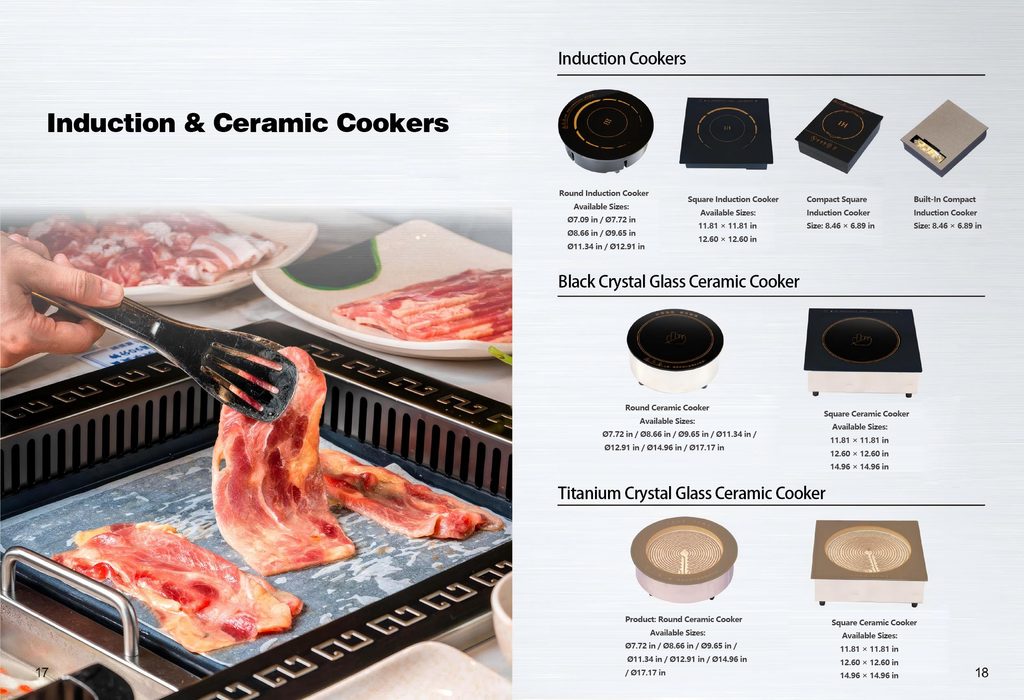
- Built-in commercial induction cookers
- Built-in ceramic cookers
- Smokeless hot pot tables
- Commercial BBQ equipment
- Smoke purification equipment
- Customized restaurant tables
- OEM and ODM solutions
Induction and ceramic cookers can be integrated into different restaurant table designs according to the project requirements.
Frequently Asked Questions
Is induction or ceramic better for a hot pot restaurant?
Both can be suitable for hot pot restaurants. Induction is generally preferred for fast heating and responsive temperature control, while ceramic cookers offer more cookware flexibility.
Can induction cookers be built into restaurant tables?
Yes. Commercial induction cookers can be designed for built-in hot pot restaurant tables according to the table structure and electrical requirements.
Can ceramic cookers be used for hot pot?
Yes. Commercial ceramic cookers can be used for front-of-house hot pot dining and can be integrated into restaurant tables.
Which cooker is easier to clean?
Both can have smooth cooking surfaces that are relatively easy to clean. Actual cleaning requirements depend on the specific product design and operating conditions.
Can JUNYAO provide customized induction and ceramic cookers?
Yes. JUNYAO provides commercial heating solutions and OEM/ODM services for restaurant projects, including customized configurations and built-in table applications.
Which Cooker Is Right for Your Hot Pot Restaurant?
Choosing between an induction cooker and a ceramic cooker depends on your restaurant concept, cookware, table design, heating requirements, and electrical specifications.
If you are planning a new hot pot restaurant or developing a custom restaurant table, tell us your table dimensions, required cooker type, voltage, quantity, and project requirements.
JUNYAO can help you select the appropriate commercial heating solution.